

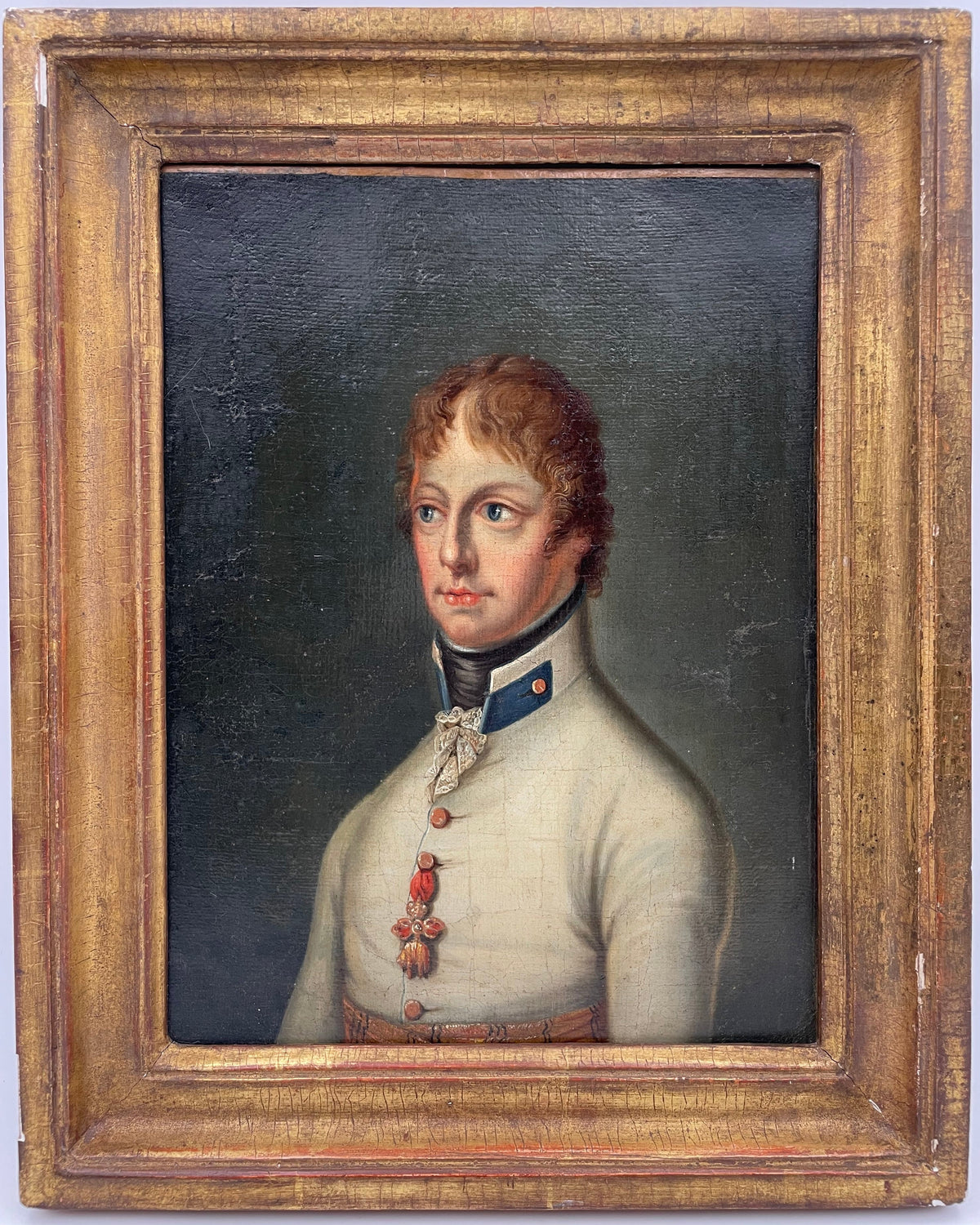
Austrian School, early 19th century
Officer with the Golden Fleece

Austrian School, early 19th century
Lady with a Jeweled Tiara, 1800s

Austrian School, early 19th century
Hussar Officer in Blue, 1800s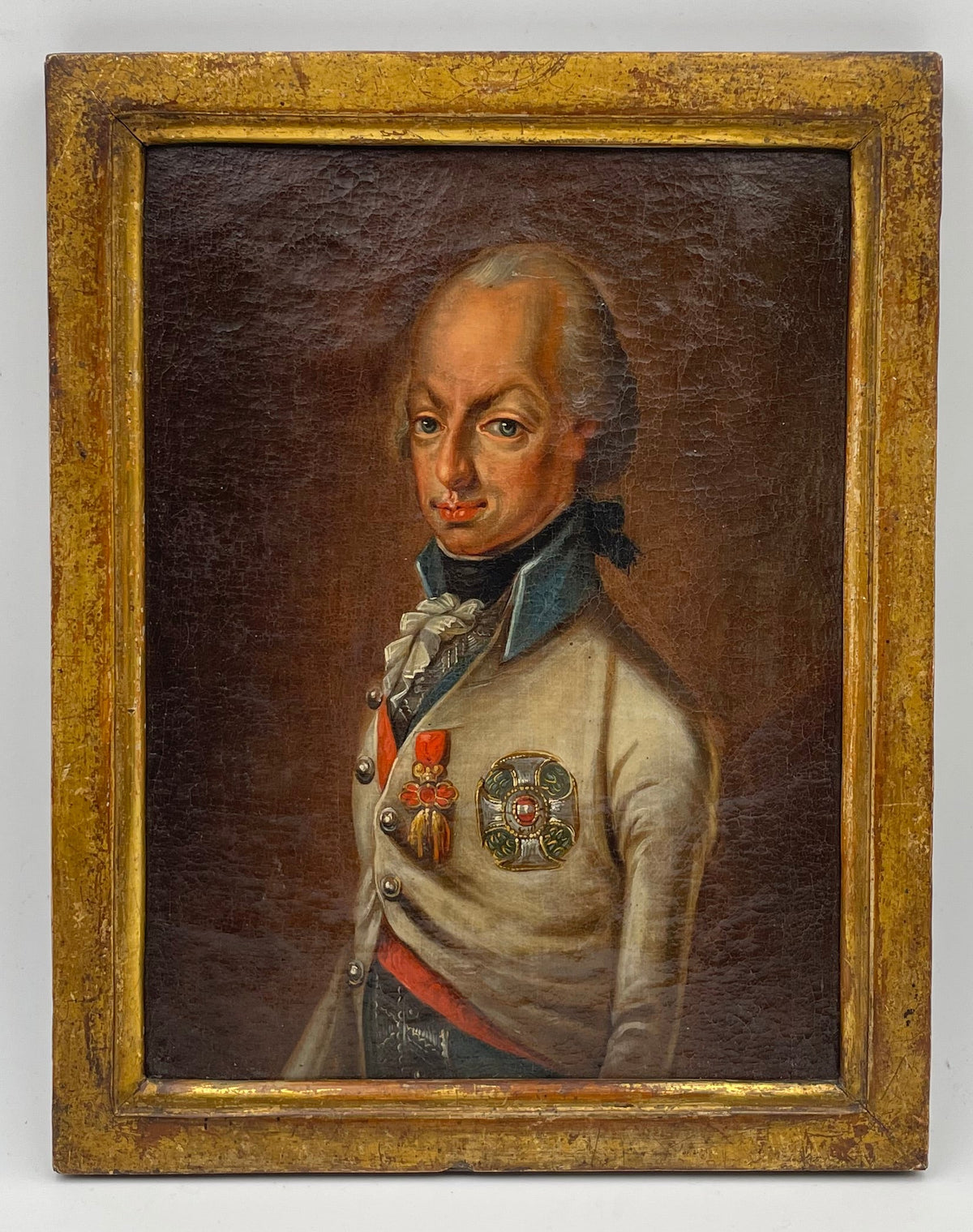
Austrian School, circa 1800
Archduke in White UniformGuides · before you buy
 Emperors, Officers and the Symbols They WoreA double-headed eagle, a golden ram on a ribbon, a white coat.Read the guide


Austrian School, early 19th century
Officer with Sash and Star

Austrian School, 19th century
Emperor Joseph II, 1800s

Austrian School, early 19th century
Habsburg Officer, 1800s
GalerieClub Fine Art
1,100+
paintings sold since 2017
 Sold
 Sold
 Sold
Our promise
- Every painting photographed front and back
- The frame you see is the frame that ships
- Free tracked UPS Express Saver to the US
Elsewhere in the gallery
-
 Subject
Antique Portrait PaintingsLadies, gentlemen and officers25 for sale
-
 Period
18th-Century French Portraits6 for sale
-
 Style
Old Money Style Antique PortraitsPortraits on dark studio grounds20 for sale
-
 Format
Small Antique Portrait PaintingsCabinet-size portraits13 for sale
- The questionsHow to Collect Antique Paintings


Habsburg portrait oil paintings
An empire needed faces. The Habsburg court sent the likeness of its rulers to embassies, garrisons and loyal households across Central Europe, and officers had their own portraits painted in the uniform of their regiment. The Habsburg portrait oil paintings here come out of that habit of display and loyalty.
-
The imperial image followed strict rules, the ruler in uniform with his orders in plain view, and versions of it were painted for officials who wanted it on their walls. An Austrian court portrait painting keeps that formality, a dark ground and every decoration painted with care.
-
The white coat of the Austrian infantry and the blue dolman of the hussars changed with each set of regulations, so an Austrian officer portrait in white uniform or in hussar dress can often be placed within the years of the Napoleonic wars from what the sitter wears.
-
One decoration mattered more than any other. Founded in 1430 by the Duke of Burgundy, the Order of the Golden Fleece passed to the Habsburgs with the Burgundian lands and remained the highest order of the imperial house. In a Golden Fleece portrait painting the golden ram hangs from a collar or a ribbon at the sitter's neck.
-
The ladies of the court were painted with their jewels, a tiara, pearls and the high-waisted dress of the early 19th century, in a Biedermeier court portrait gentler than the formal image of an emperor.