
Skip to content

Cart

Your cart is empty

Article: Animal Painting in 19th-Century France

Animal Painting in 19th-Century France

Animal Painting in 19th-Century France

To view our collection of animal paintings
Part of our series on animal painting in our Collecting Guides. See also our guide to Collecting Antique Dog Portraits and our pillar guide to The Barbizon School in Painting.

In 1855, at the Exposition Universelle in Paris, one of the most talked-about paintings in France was not a battle, a martyrdom or an emperor. It was a horse market: Rosa Bonheur's The Horse Fair, an enormous canvas of plunging Percherons that made its painter the most famous woman artist in the world. That celebrity tells you something about the century. Nineteenth-century France took animal painting seriously, gave it Salon medals and museum walls, and produced specialists in everything from lions to poultry. For today's collector, the field that resulted is broad, characterful and, outside its most famous names, remarkably affordable.

Three Traditions in One Genre

The Romantic wild. Delacroix haunted the Paris menagerie sketching lions and tigers, and made the big cat a Romantic emblem of untamed nature. His followers and the sculptors and painters around Antoine-Louis Barye carried the exotic animal through the century, feeding a public hungry for the wild in an industrializing age.

Circle of Eugene Delacroix, two tigers in a landscape, oil on canvas, mid 19th century, framed

From our collection: Circle of Eugène Delacroix, Two Tigers in a Landscape, Mid-19th Century

Two tigers painted in the Romantic manner of Delacroix's circle at mid-century: loose, hot-blooded brushwork in the service of the era's fascination with the wild. The attribution vocabulary here ("circle of") is explained in full in our pillar guide.

View this painting

The rural herd. The second tradition grazes. Bonheur's cattle and horses, Constant Troyon's cows, Charles Jacque's sheep: the animal painters of the Barbizon generation made livestock a serious subject, painted from life in the fields. This is the tradition that overlaps most with our landscape guides, since the animated pastoral landscape and the animal picture are close cousins; our Barbizon pillar and pastoral guide tell that side of the story.

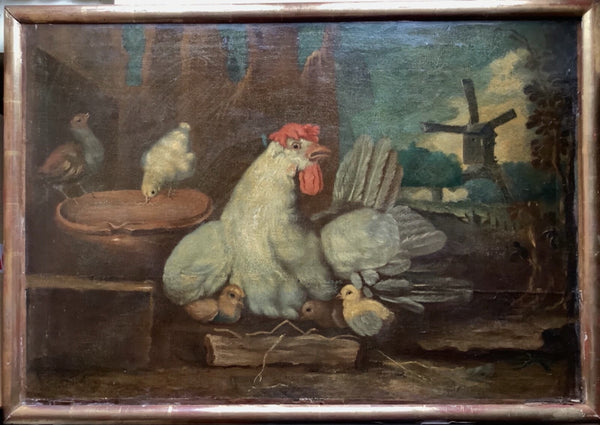
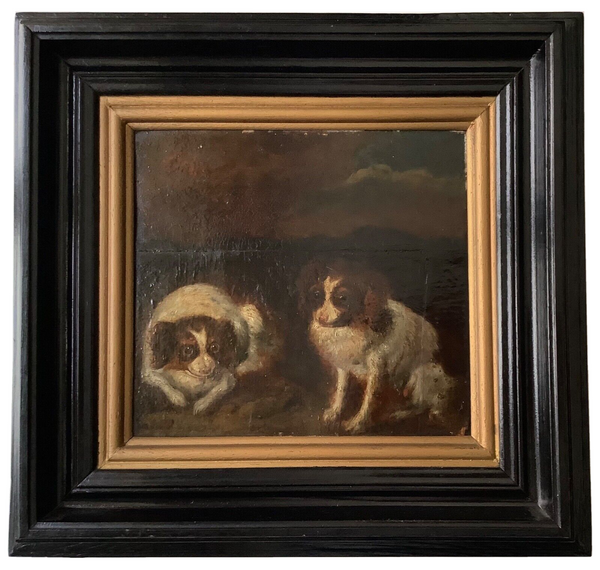
The hunt and the household. The third tradition is domestic: hunting scenes with hounds and game, farmyard pictures of poultry and rabbits descending from the great Flemish and French still-life tradition of Snyders and Oudry, and the companion-animal portraits covered in our dog portrait guide.

Ernest Brigot, fox and duck hunt scene, signed oil on canvas, 19th century

From our collection: Ernest Brigot, Fox and Duck Hunt Scene, Signed

A signed 19th-century hunt scene by Ernest Brigot (1836-1910): fox and duck in the dramatic confrontation the genre loved. Hunt pictures were painted for the households that hunted, and they remain the natural choice for libraries, lodges and anywhere the outdoors comes inside.

View this painting

Tristan Lacroix, Courtyard Hunting, signed oil on wood panel dated 1891, French Realist painting

From our collection: Tristan Lacroix, Courtyard Hunting, Signed, 1891

A signed and dated panel by Tristan Lacroix (1839-1914), bringing the hunt home to the courtyard in the precise Realist manner of the century's end. Small, dated, signed: the collector's checklist in one object.

View this painting

The Exotic Detour

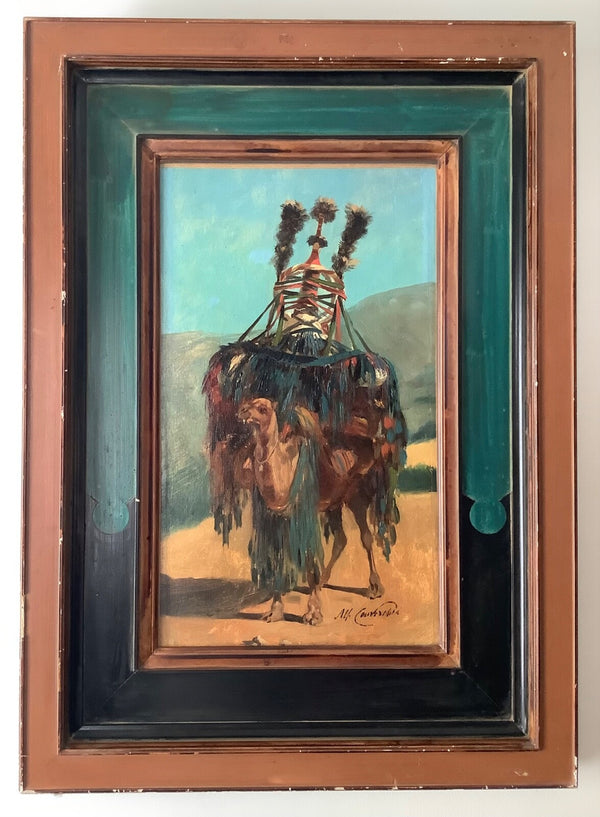
One more current runs through the century: Orientalism took French painters to North Africa, and the animals came back in the baggage. Camels, Arabian horses and desert caravans joined the repertoire, painted with the same seriousness as the herds of Normandy.

Alfred Couverchel, portrait of a wedding camel in the desert, signed oil on canvas, 19th century French Orientalist painting

From our collection: Alfred Couverchel, Portrait of a Wedding Camel in the Desert, Signed

A signed Orientalist canvas by Alfred Couverchel (1834-1867): a ceremonial wedding camel in full regalia, painted with portrait-level attention. A rare subject by a painter whose short career makes signed works genuinely scarce.

View this painting

Collecting the Field Today

The famous names have left the building. Bonheur, Troyon and the signed Barbizon animal painters command strong prices. The opportunity, as in every field we cover, sits one rank below: the Salon specialists, the signed regional painters, the fine unsigned French School work, delivering the same century and the same craft at a fraction of the cost.

Subject drives demand. Dogs and horses have the deepest collector bases; hunt scenes hold steady with a traditional audience; cattle and sheep are the sleeper value of the field, superb painting at modest prices because the subject is out of fashion. Buying against fashion is how collections get interesting.

Judge the animal like a face. The test never changes: presence. A good animal painting gives you a creature that breathes, in fur or feather rendered with real command. Condition and signature follow the same rules as everywhere else, and our condition and signatures guides apply in full.

Browse Our Animal Paintings

Read More in This Series

Continue with Collecting Antique Dog Portraits, or revisit the rural side of the story in Pastoral Scenes: Shepherds and Sheep in 19th-Century French Painting.

Read more

Collecting Antique Dog Portraits
Animal cluster

Collecting Antique Dog Portraits

People buy landscapes for the wall and dogs for the heart. The tradition from Oudry to Landseer, collecting by breed, and how to judge a painted dog.

Read more