

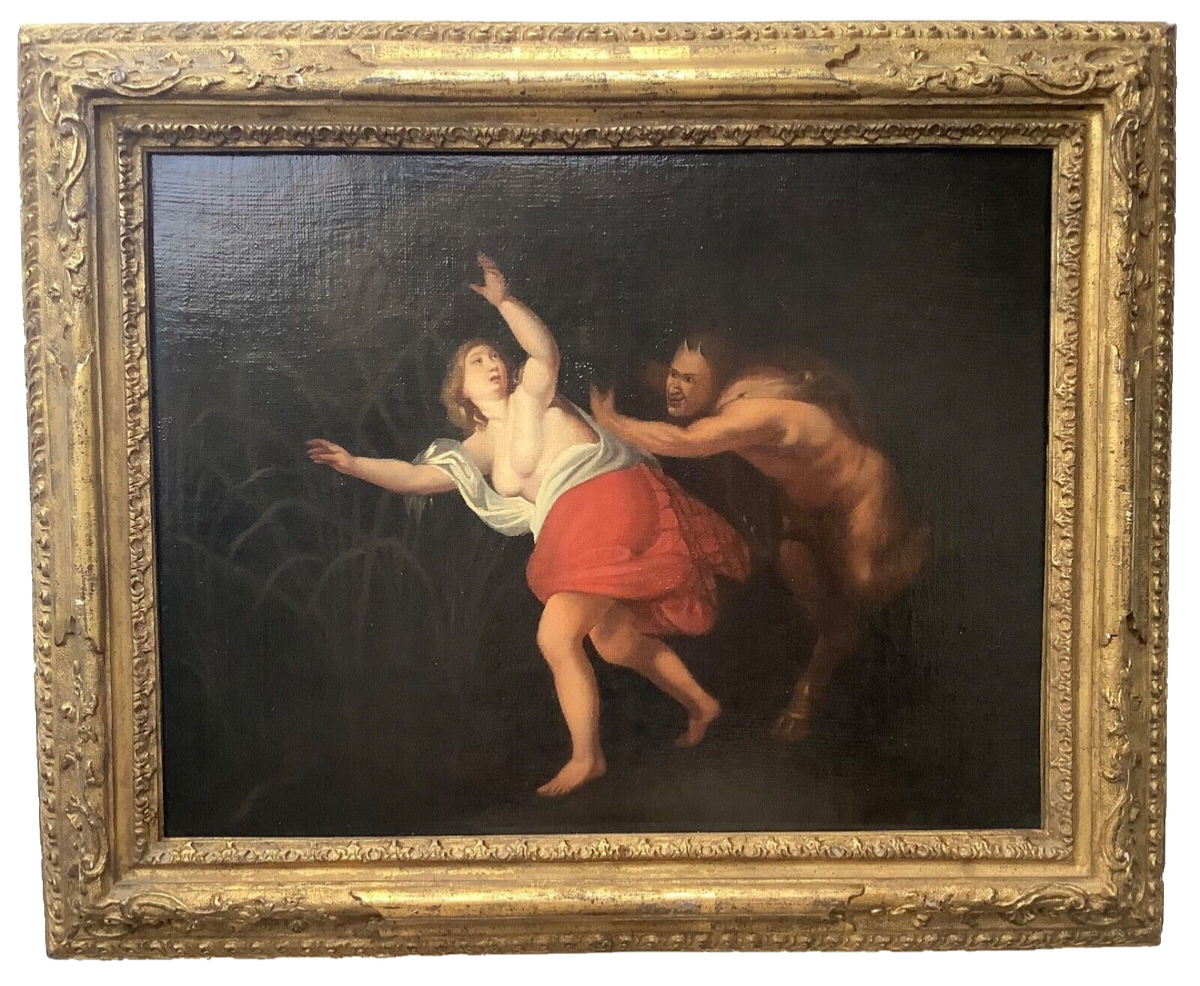
Italian School, 18th century
Pan and Syrinx, 1700s

Italian School, 17th century
Ecce Homo, 1600s

Italian School, 17th century
Penitent Mary Magdalene, 1600s


GalerieClub Fine Art
1,100+
paintings sold since 2017
 Sold
 Sold
 Sold
Our promise
- Every painting photographed front and back
- The frame you see is the frame that ships
- Free tracked UPS Express Saver to the US


Antique Italian School paintings
For three centuries Europe learned to paint from Italy. Painters travelled south to study its churches and palaces, and the manner they brought home shaped every other school. An Italian Old Master painting in this collection comes from that tradition, painted in the 17th or the 18th century.
-
The Baroque made faith dramatic. Italian painters of the 17th century lit a single figure against deep darkness, a method called chiaroscuro, from the Italian words for light and dark, so that a face, a hand or a tear carries the whole scene. A 17th century Italian religious painting uses that contrast to hold the viewer's eye on the moment of grief, prayer or revelation.
-
The next century lightened the palette. Myth returned alongside faith, with nymphs, satyrs and the gods of antiquity set in wooded landscapes, and an 18th century Italian painting often trades the Baroque darkness for softer light and a more decorative grace.
-
Most Italian paintings of these centuries carry no signature. Large workshops, pupils and followers worked in the manner of the masters they served, and a work is described here as Italian School with its century, never under a name it cannot support. Our guide to reading an attribution explains how.