

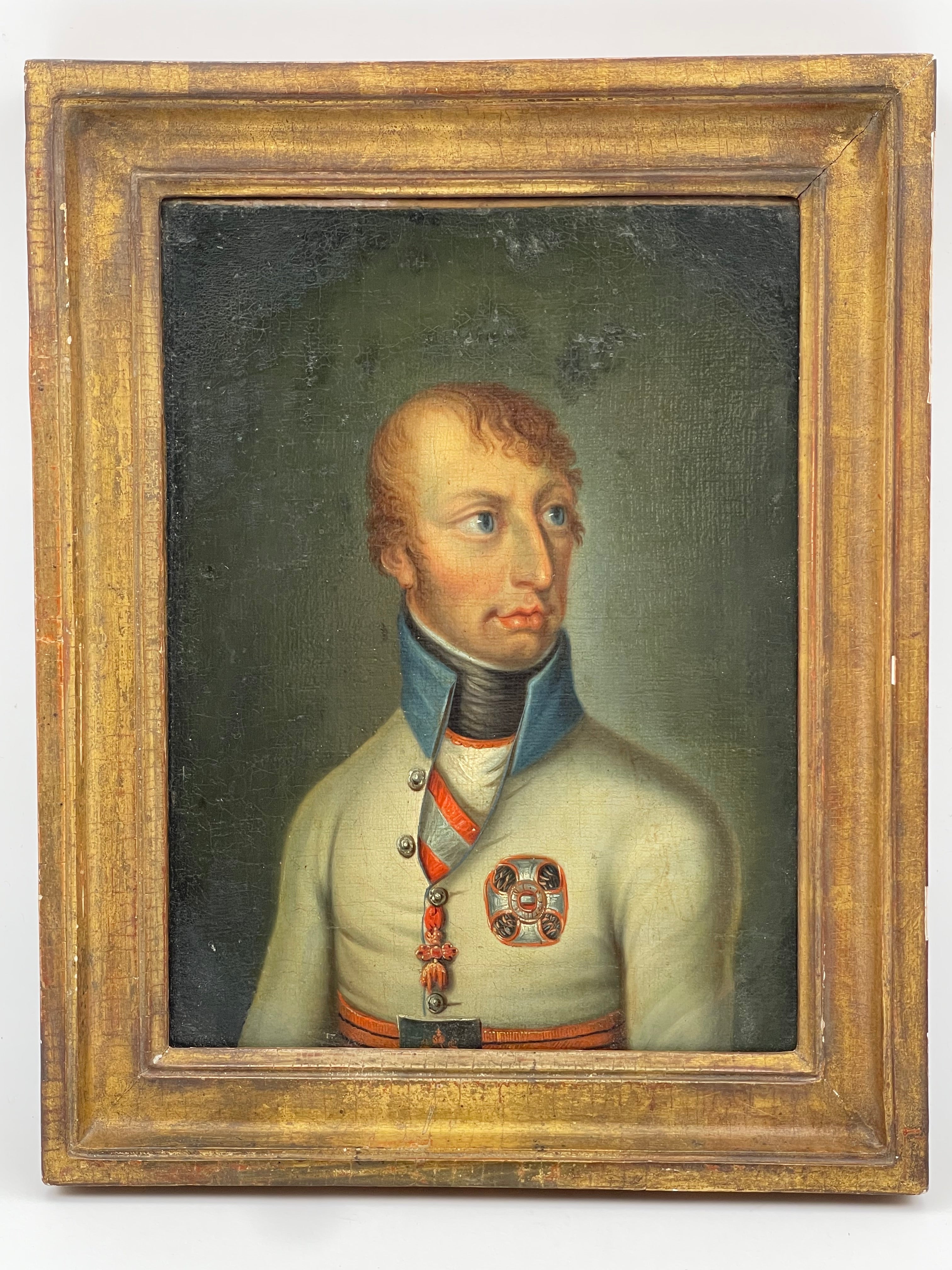
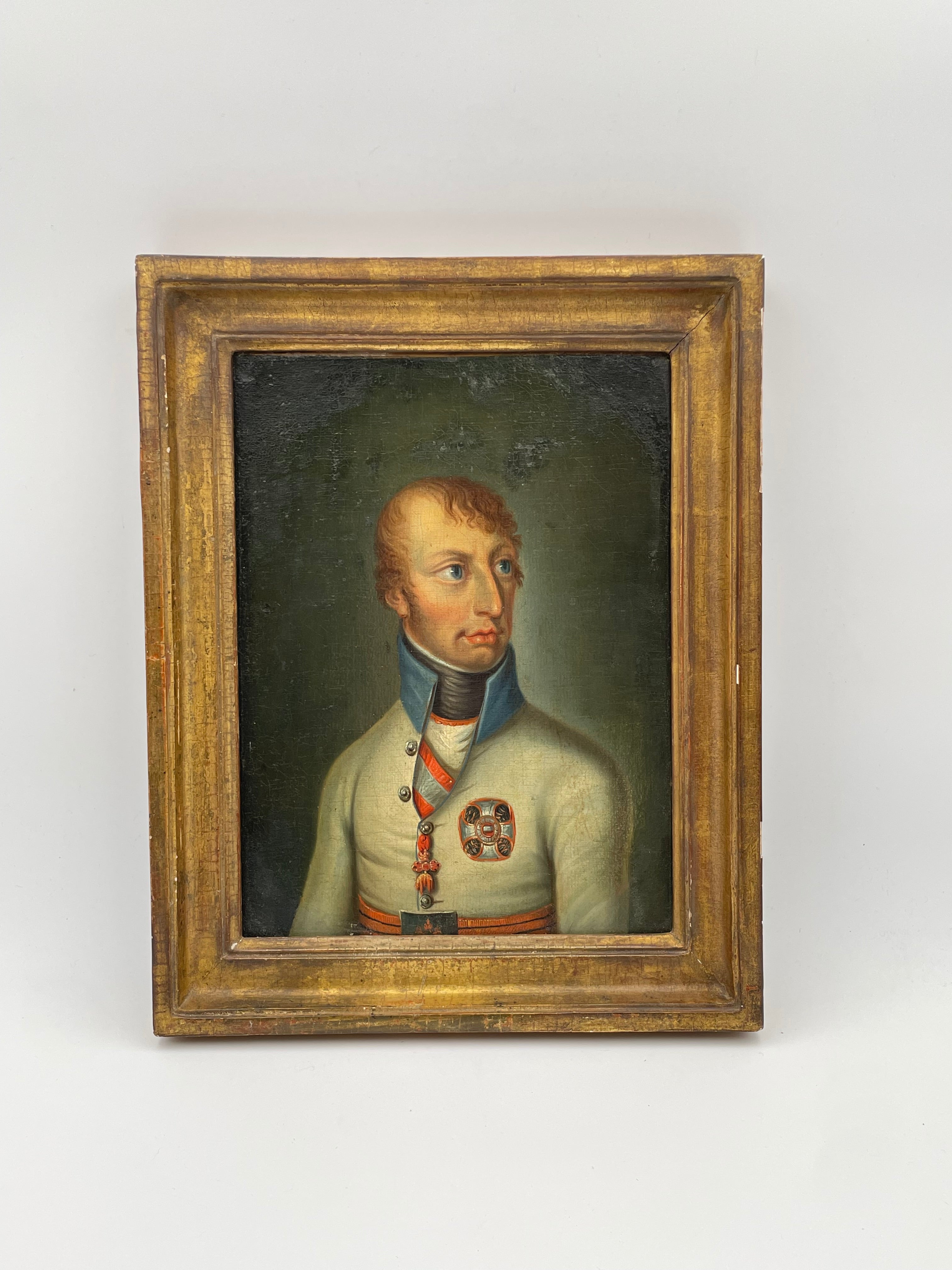
Austrian School, early 19th century
Habsburg Officer, 1800s
GalerieClub Fine Art
1,100+
paintings sold since 2017
 Sold
 Sold
 Sold
Our promise
- Every painting photographed front and back
- The frame you see is the frame that ships
- Free tracked UPS Express Saver to the US
Elsewhere in the gallery
-
 Collection
Habsburg & Austrian Imperial PortraitsEmperors, officers and court ladies7 for sale
-
 Style
Old Money Style Antique PortraitsPortraits on dark studio grounds20 for sale
-
 Format
Small Antique Portrait PaintingsCabinet-size portraits13 for sale
-
 Subject
Antique Animal PaintingsDogs, farmyards and the hunt10 for sale
- The questionsHow to Collect Antique Paintings


Antique portrait paintings for sale at GalerieClub
Every portrait began as a commission. A family wanted a face kept, a regiment wanted an officer remembered, a court wanted its likeness sent abroad. The antique oil portraits in this collection come out of that long habit, all painted more than a century ago, on canvas or panel, many of them still in gilt frames.
-
Silk, lace and pearls mark the portrait of a lady. A powdered wig, a lace jabot or a high white stock mark the portrait of a gentleman. Clothes date these faces more reliably than style does, since a cap, a collar or the cut of the hair can place a sitter within a decade, and the listings say so when the clothes allow it. Aristocratic sitters hang next to prosperous families whose names were never written down.
-
The century changed the sitter. Powder went out of fashion, and young men posed in dark coats with stocks tied high under the chin, while women sat in pearls with flowers in their hair. Some painters finished these portraits smoothly for the parlour. Others worked quickly from life, in looser oil studies that keep the speed of the sitting.
-
A uniform is a document. Its cut, its facings, its buttons and the star or sash of an order often reveal the army, the rank and the years of service before any inscription does. Each military portrait here is described from the uniform itself, not from a family story passed down with it.
-
A signature changes what can be said, and on a signed antique portrait painting it usually sits in a lower corner, sometimes with a date. Without one, the portrait is given to a school and a period, and after, circle of or follower of mark how close it stands to a known portraitist, as our guide to reading an attribution explains. Most sitters were never named on the canvas. For the period, an unknown sitter is the rule, not a flaw.
-
Most framed portraits keep a gilt frame, carved or moulded, and gilding worn through to the red bole is a sign of age rather than damage. A few older portraits are painted on wood panel. Others come unframed, a plain stretched canvas ready for a frame of the buyer's choosing.